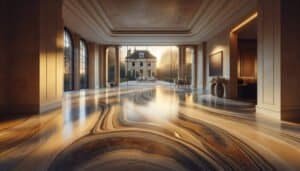


Even in a carefully looked-after Surrey home, marble gradually loses its shine because the clarity you see on day one comes from the smoothness of the surface. Every day foot traffic, tiny bits of grit and regular kitchen activity all leave micro-scratches that break up the reflection. Over time, these marks scatter the light, leaving the stone looking flat or patchy, no matter how much you clean it.
 Fila Pro Floor Cleaner |  LTP MPG Sealer H20 |  Vileda H2PrO Spin Mop System |
Many household cleaners are slightly acidic or contain ingredients that react with marble. These create dull etch marks that look like stains but are actually permanent surface damage. Once etched, no chemical cleaner can restore the finish. The only way to remove these marks is to resurface the stone, restoring clarity.

Acid etching appears as a dull watermark or a cloudy ring. It happens when acidic liquids — from lemon juice to bathroom cleaners — react with marble, dissolving the surface’s top layer. Micro-scratching, on the other hand, is caused by friction and grit. Both problems affect the uppermost layer, meaning they cannot be removed through cleaning because the damage is not dirt — it is missing stone.
Regular cleaning removes soil but does not restore the smooth surface that gives marble its elegant appearance. If the stone has been affected by older coatings, residues or incorrect products, cleaning may even highlight dull patches. This is why many Surrey homeowners feel stuck: no amount of mopping can restore the shine once the surface has been compromised.
Some issues remain visible until the damaged layer is removed. Yellowing near moisture, old waxes that have built up over the years, and deep-set stains may stay in place despite cleaning. At this point, polishing moves beyond cosmetic improvement — it becomes the only reliable way to restore a consistent, high-quality finish.

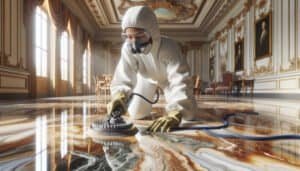
Professionals use graded diamond abrasives to remove the worn surface gently. Each pass smooths the stone further, removing etches and scratches and preparing the marble for polishing. This controlled process keeps the stone safe while restoring a clean, even surface.
Polishing rebuilds the shine using fine diamond pads that refine the surface until it reflects light clearly again. As the marble becomes smoother, colours deepen, and natural veining appears more defined. This transformation is often striking — especially on well-known marbles like Carrara and Crema Marfil.
A professional assessment considers factors such as stone type, depth of wear, moisture levels, and previous treatments. This ensures the correct starting grit, the right tools, and the most suitable protection system are chosen, resulting in a beautiful, long-lasting finish.
Excellent results appear when the damage is shallow and consistent. Good results occur when deeper issues exist, but can still be blended well. Improved results are achieved when the stone has permanent characteristics, such as deep cracks or mineral variation, that cannot be removed but can be reduced.
A professionally polished marble floor can maintain its finish for several years. Protective sealers slow down staining, while regular pH-neutral cleaning keeps the surface clear. High-traffic areas in busy Surrey households may benefit from a light touch-up polish every 12–18 months.
DIY kits cannot remove etching or scratches because they lack the tools needed to resurface marble. Generic cleaners often cause more damage. Professional polishing is an investment because it resolves the underlying problems rather than masking them.
After polishing, a breathable impregnating sealer helps reduce the rate at which spills are absorbed. This gives valuable reaction time to wipe up marks before they set, especially in kitchens and bathrooms.
Using the right products — mild, pH-neutral cleaners designed for natural stone — keeps the surface clear without causing etching. Microfibre mops prevent abrasion, while reasonable grit control protects high-traffic areas.
Routine wiping, weekly neutral cleaning and periodic professional maintenance help the finish last longer. When the first signs of dullness appear, a light re-polish can restore the surface before deeper work becomes necessary.
Some conditions limit the amount of improvement possible. Rising damp may cause recurring marks, while excessive lippage can prevent an entirely uniform polish without complete grinding. Natural mineral variations can also remain visible even after polishing.
If the stone has deep scratches, cracks, or uneven tiles, more extensive work may be needed before polishing. Resin repairs, grout restoration, or full-level grinding may be recommended to ensure a stable and consistent finish.
Professional polishing uses controlled water levels, sealed equipment and tidy workflows to keep your home clean. There is no airborne dust, and the process is carefully managed to protect surrounding areas.
A specialist explains each stage, outlines any limitations and provides transparent, itemised pricing. This transparency removes uncertainty and ensures you know exactly what to expect from the results.
An inspection identifies the stone type, level of wear and any risks before work begins. This ensures the correct approach is taken and avoids surprises later.
A professional assessment helps determine whether polishing will deliver the level of finish you want and what approach will be used.
Talking through your goals and concerns helps tailor the process to your home and ensures the work is carried out with confidence and care.
Before-and-after visuals and local Surrey case studies show the standard of finish you can expect and help you imagine the transformation in your own home.
No — polished marble is not inherently slippery. Contaminants, not the finish, more often cause slips.
Most Surrey homes require 1 to 2 days, depending on the floor’s size and condition.
Most stains improve significantly, but deep mineral or moisture-related marks may not vanish entirely.
No — the process is clean, controlled and low-disruption.
Light-use areas may only need polishing every few years; high-traffic areas benefit from more frequent touch-ups.
Marble polishing offers Surrey homeowners a reliable way to restore clarity, colour and elegance when everyday cleaning no longer makes a difference. It removes the damaged surface rather than trying to disguise it, giving a fresh start for long-term care.
With the correct sealing and maintenance, a polished finish stays beautiful for years and reduces the need for more invasive work. The key is choosing a specialist who understands marble’s unique characteristics and can deliver predictable results.
A professional inspection is the safest way to decide whether polishing is the right choice for your floor and what level of transformation you can expect.
Paul White is a natural stone and tile restoration specialist with over 25 years of hands-on experience throughout Surrey. His work focuses on restoring, protecting and preserving natural stone surfaces, from delicate Victorian encaustic tiles to high-value marble and limestone installations.
His expertise includes deep mechanical refinishing, stain and etching correction, diamond abrasive sequencing, breathable sealing systems and specialist heritage restoration. With extensive real-world problem-solving experience, he offers calm, clear guidance grounded in thousands of successful projects.
Paul is committed to helping homeowners make confident decisions through safe processes, long-term protection and practical maintenance advice that prevents unnecessary damage.