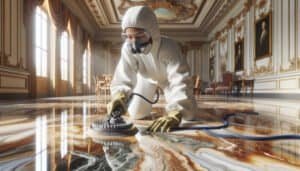
Marble restoration is a specialised process that goes far beyond simple cleaning or polishing. It’s a comprehensive approach to reviving the original beauty of marble surfaces that have been dulled, scratched, stained, or otherwise damaged over time. Understanding what restoration entails can help you appreciate the skill and precision required—and why it’s often best left to professionals.
Restoration vs. Cleaning vs. Polishing
Before diving into the details, it’s important to distinguish between three commonly confused terms:
- Cleaning: Involves removing surface dirt, dust, and grime using pH-neutral cleaners. It’s part of regular maintenance and doesn’t address deeper damage.
- Polishing: Enhances the shine of marble by smoothing the surface, but it doesn’t fix scratches, etching, or unevenness.
- Restoration: A whole process that may include grinding, honing, polishing, and sealing to repair and rejuvenate the marble.
Key Steps in the Marble Restoration Process
Inspection and Assessment
Every restoration begins with a thorough evaluation of the marble’s condition. Professionals assess the type of marble, the extent of damage, and the appropriate techniques needed for restoration.
Grinding (Lippage Removal)
If the marble tiles are uneven—known as lippage—grinding is used to level the surface. This involves using industrial diamond abrasives to remove a thin layer of stone, creating a flat, uniform surface.
Honing
Honing smooths the marble using finer abrasives than those used in grinding. It removes minor scratches, etching, and stains, and prepares the surface for polishing. Honing can leave a matte or satin finish, depending on the desired look.
Polishing
Polishing brings out the marble’s natural shine. Using progressively finer abrasives or polishing powders, the surface is buffed to a glossy finish. This step restores the reflective quality that marble is known for.
Sealing
Because marble is porous, sealing is essential to protect it from future staining. A high-quality sealant penetrates the surface and creates a barrier against moisture, oils, and other contaminants. Sealing doesn’t make marble stain-proof, but it significantly improves its resistance.
Tools and Materials Used
Professional marble restoration requires specialised tools and materials, including:
- Diamond grinding and honing pads
- Polishing powders and compounds
- Industrial-grade floor machines
- Wet vacuums and buffers
- Sealants formulated for natural stone
These tools are not typically found in the average household, and misusing them can cause irreversible damage.
DIY Marble Restoration: What You Can and Can’t Do
With the rise of home improvement tutorials and easy access to cleaning products, many homeowners are tempted to tackle marble restoration on their own. While some aspects of marble care can be safely managed without professional help, full-scale restoration is a different story. Knowing the boundaries of what you can and can’t do yourself is crucial to preserving the integrity of your marble surfaces.
What You Can Do Yourself
Routine Cleaning
Regular maintenance is essential for keeping marble looking its best. You can safely:
- Wipe surfaces with a soft cloth and warm water
- Use pH-neutral stone cleaners specifically designed for marble
- Immediately clean up spills to prevent staining or etching
Avoid using vinegar, lemon juice, or any acidic or abrasive cleaners, as these can damage the surface.
Light Polishing
For minor dullness, you can use a marble polishing powder or cream. These products can restore a bit of shine, especially on countertops or vanity tops. However, they won’t fix deep scratches or etching.
Sealing (With Caution)
Applying a marble sealer can help protect against stains. Many sealers are available for consumer use, and some are easy to apply with a cloth or sponge. However, improper application—such as using the wrong type of sealer or failing to clean the surface thoroughly beforehand—can lead to streaking or uneven protection.
What You Shouldn’t Attempt Without Experience
Grinding or Honing
These processes involve removing layers of stone to eliminate scratches, etching, or uneven surfaces. They require specialised equipment and a deep understanding of marble’s properties. DIY attempts can easily result in gouges, swirl marks, or an uneven finish.
Deep Stain Removal
Some stains penetrate deep into the marble and require poultices or chemical treatments tailored to the specific type of stain and marble. Using the wrong method can worsen the stain or discolour the stone.
Repairing Chips or Cracks
Filling chips or cracks with epoxy or resin requires colour matching and precision. A poor repair job can be more noticeable than the original damage.
Restoring High-Traffic Areas
Floors in entryways, kitchens, or commercial spaces often suffer from extensive wear. Restoring these areas involves large-scale grinding and polishing that’s best left to professionals with industrial equipment.
The Risk of DIY Gone Wrong
Attempting restoration without the right tools or knowledge can lead to:
- Permanent surface damage
- Uneven finishes
- Increased costs for professional correction
- Reduced property value if marble is visibly damaged
In short, while DIY maintenance is encouraged, restoration is a delicate process that often requires a trained hand. The following section will help you recognise when it’s time to call in a specialist.
When to Call a Marble Restoration Specialist
While some marble care tasks can be handled at home, there comes a point when professional expertise is not just helpful—it’s essential. Marble restoration specialists bring a level of precision, experience, and equipment that ensures your surfaces are treated correctly and restored to their original beauty without risk of further damage.
Signs That You Need a Professional
Deep Scratches or Chips
Minor surface scratches may be polished out, but deep gouges or chips require grinding and filling techniques that demand professional tools and skill. Attempting to fix these yourself can lead to uneven surfaces or visible patchwork.
Widespread Etching or Staining
Etching from acidic substances and stains from oils or colored liquids can penetrate deep into the marble. If these marks cover a large area or have been present for a long time, DIY solutions are unlikely to be effective. Professionals use poultices and specialised treatments tailored to the type of stain and marble.
Uneven Surfaces or Lippage
If your marble tiles are misaligned or uneven, grinding is necessary to level the surface. This process requires industrial-grade diamond abrasives and precise technique to avoid damaging the stone.
Dull, Lifeless Appearance
When marble loses its shine across large areas—especially in high-traffic zones like hallways or commercial spaces—restoration involves honing and polishing with professional equipment. DIY polishing creams won’t achieve the same results.
Historical or High-Value Marble
Antique marble or marble in luxury properties deserves expert care. Restoration specialists understand how to preserve the integrity and value of these surfaces without compromising their character.
Benefits of Hiring a Marble Restoration Specialist
Expertise and Experience
Professionals understand the nuances of different marble types and how they respond to various treatments. Their experience helps avoid common mistakes that can lead to permanent damage.
Access to Professional Tools
Restoration requires equipment like planetary grinders, diamond pads, and high-powered polishers—tools that are expensive and impractical for most homeowners to purchase or operate safely.
Long-Term Cost Savings
While hiring a specialist may seem costly upfront, it can save money in the long run by preventing damage, extending the life of your marble, and avoiding the need for replacement.
Superior Aesthetic Results
Professionals can restore marble to a like-new condition, achieving a level of shine, smoothness, and uniformity that DIY methods simply can’t match.
Time Efficiency
Restoration can be time-consuming and physically demanding. Specialists complete the job efficiently, minimising disruption to your home or business.
When in Doubt, Get an Assessment
If you’re unsure whether your marble needs professional restoration, many specialists offer free or low-cost consultations. They can assess the damage and recommend the best course of action—whether that’s a complete restoration or simple maintenance tips.
How to Choose the Right Marble Restoration Specialist
Once you’ve decided that your marble surfaces need professional attention, the next step is finding the right expert for the job. Not all restoration specialists are created equal—some may excel in residential work, while others focus on commercial or historical projects. Choosing the right professional can make the difference between a flawless finish and a costly disappointment.
What to Look for in a Marble Restoration Specialist
Experience and Specialisation
Look for professionals who specialise specifically in marble or natural stone restoration—not just general flooring or cleaning services. Ask how many years they’ve been in business and whether they’ve worked on projects similar to yours in terms of scale and marble type.
Certifications and Training
While not always required, certifications from organisations like the Marble Institute of America (MIA) or the Natural Stone Institute can indicate a higher level of training and professionalism. These credentials show that the specialist is committed to industry standards and best practices.
Portfolio of Past Work
A reputable specialist should be able to provide before-and-after photos of previous projects. This gives you a visual sense of their capabilities and the quality of their work. Look for examples that closely match your situation—whether it’s a polished kitchen countertop or a honed marble floor.
Customer Reviews and Testimonials
Online reviews on platforms like Google, Yelp, or Houzz can offer valuable insights into a specialist’s reliability, communication, and results. Pay attention to how they handle both praise and criticism.
Insurance and Guarantees
Ensure the specialist is fully insured in case of accidental damage during the restoration process. Some professionals also offer satisfaction guarantees or warranties on their work, which can provide peace of mind.
Questions to Ask Before Hiring
- What type of marble do you have experience working with?
- Can you explain your restoration process step by step?
- What equipment and products do you use?
- How long will the restoration take?
- Do you offer a written estimate or contract?
- What kind of maintenance do you recommend after restoration?
Red Flags to Watch Out For
- Vague or evasive answers to your questions
- No portfolio or references available
- Unusually low quotes (which may indicate cutting corners)
- Lack of proper equipment or use of generic cleaning products
- Pressure to commit without a clear explanation of services
Choosing the right specialist is not just about price—it’s about trust, transparency, and proven results. Taking the time to vet your options carefully will ensure your marble is restored with the care and expertise it deserves.
Cost of Professional Marble Restoration
One of the most common concerns homeowners and property managers have when considering marble restoration is cost. While it’s true that hiring a specialist involves an upfront investment, the value it brings in terms of quality, longevity, and aesthetics often outweighs the expense. Understanding the factors that influence pricing can help you budget effectively and avoid surprises.
Factors That Affect the Cost
Size of the Area
The larger the surface area, the higher the cost. Restoration is typically priced per square foot, with rates decreasing slightly for larger projects due to economies of scale.
Type and Extent of Damage
The more severe the damage—such as deep scratches, heavy staining, or lippage—the more labour-intensive the restoration process will be. Surfaces requiring grinding or multiple rounds of honing and polishing will cost more than those needing only light polishing and sealing.
Type of Marble
Some marbles are more complex or more porous than others, which affects how they respond to restoration. Rare or exotic marbles may require specialised techniques or products, increasing the overall cost.
Finish Desired
Different finishes—such as high-gloss polish, honed matte, or satin—require varying levels of effort and expertise. A mirror-like polish, for example, takes more time and precision than a simple honed finish.
Accessibility and Location
If the marble is in a hard-to-reach area (like a staircase or vertical wall), or if the property is in a remote location, additional labour or travel fees may apply.
Average Price Ranges
While prices vary by region and provider, here are some general estimates (as of recent industry averages):
- Basic polishing and sealing: $3–$6 per square foot
- Honing and polishing: $6–$10 per square foot
- Grinding and full restoration: $10–$20+ per square foot
- Chip or crack repair: $100–$300 per repair, depending on size and complexity
Keep in mind that these are ballpark figures. A detailed quote from a specialist will give you a more accurate estimate based on your specific needs.
Comparing Cost vs. Value
While DIY methods may seem cheaper, they often fall short in terms of results—and can even lead to costly mistakes. Professional restoration not only revives the beauty of your marble but also extends its lifespan, potentially saving you thousands in replacement costs.
Moreover, well-maintained marble can enhance the value of your property, making it a worthwhile investment if you’re planning to sell or rent.
Preventing Future Marble Damage
Once your marble has been professionally restored, the next step is keeping it in pristine condition for as long as possible. While marble will always require a bit of extra care due to its natural softness and porosity, a few simple habits and precautions can go a long way in preserving its beauty and minimising the need for future restoration.
Daily Care Tips
- Wipe spills immediately: Acidic substances like lemon juice, vinegar, wine, and tomato sauce can etch marble within seconds. Clean up spills as soon as they happen using a soft cloth and water.
- Use a pH-neutral cleaner: Avoid harsh or acidic cleaners. Instead, use a cleaner specifically formulated for natural stone or a mild soap diluted in water.
- Dust and sweep regularly: Grit and dirt can act like sandpaper on marble floors. Use a soft broom or microfiber mop to remove debris.
Protective Measures
- Use coasters and placemats: Always place coasters under glasses and mats under plates, especially on marble countertops and dining tables.
- Place rugs in high-traffic areas: Entryways, hallways, and kitchen floors benefit from area rugs or runners to reduce wear and tear.
- Install felt pads under furniture: Prevent scratches by placing felt pads under chair legs, tables, and other movable furniture.
Sealing Your Marble
Sealing helps protect marble from stains and moisture. While sealing doesn’t make marble completely stain-proof, it does give you more time to clean up spills before they penetrate the surface.
- How often should you seal?
It depends on the type of marble and how heavily it’s used. As a general rule, reseal every 6 to 12 months. You can test if your marble needs sealing by placing a few drops of water on the surface—if it darkens within a minute, it’s time to reseal. - Use the right sealer: Choose a penetrating sealer designed for natural stone. If unsure, consult your restoration specialist for recommendations.
Avoiding Common Mistakes
- Don’t use vinegar, bleach, or ammonia-based cleaners.
- Don’t place hot pots or pans directly on marble surfaces.
- Don’t use abrasive scrubbers or steel wool.
- Don’t ignore minor stains or scratches—address them early to prevent worsening.
By incorporating these preventive measures into your routine, you can extend the life of your marble and reduce the frequency and cost of future restorations.
Conclusion
Marble restoration is more than just a cosmetic fix—it’s a careful, skilled process that preserves the elegance and longevity of one of the most beautiful natural materials used in homes and buildings. While most homeowners can handle routine cleaning and light maintenance, full-scale restoration requires a level of expertise, precision, and equipment that only a specialist can provide.
If your marble surfaces are showing signs of deep wear, staining, etching, or unevenness, calling in a professional is not just a wise choice—it’s often the only way to ensure the job is done safely and effectively. A qualified marble restoration specialist can bring your stone back to life, protect it from future damage, and help you maintain its value for years to come.
Ultimately, the decision comes down to the condition of your marble, your comfort level with DIY methods, and your long-term goals for the space. By understanding the restoration process, knowing when to seek help, and taking steps to prevent future damage, you can enjoy the timeless beauty of marble with confidence and peace of mind.